Guide · Web ecosystems
What is a digital ecosystem, and why does your business need one?
Having Instagram, a website and WhatsApp isn't the same as having a system. Here we explain the difference, the four layers that make one up and where to start without overspending.
Definition
A digital ecosystem is the set of connected channels and tools that takes someone from discovering your business to buying from you and coming back: how they find you, where they understand your offer, who answers them and how you measure what happened. It works even when you're not checking your phone.

01 The problem
A website isn't an ecosystem.
Most businesses already have an online presence. What they don't have is a path that connects the pieces.
Picture a common scene: the business has an active Instagram, a website built two years ago that nobody has touched since, and a WhatsApp the owner answers in between other things, sometimes at eleven at night. When a new customer shows up, nobody knows whether they came from an ad, from Google or because a friend passed along the number.
Each piece works on its own, but people get lost between them. Someone sees an ad, lands on a website that doesn't say what to do next, sends a WhatsApp message, gets no answer for two hours and ends up buying from the competitor who did reply.
A digital ecosystem solves exactly that: each part hands the customer to the next. The ad leads to a page with one clear action, the page leads to a conversation, the conversation gets an instant answer, and everything is recorded so you know what works and what doesn't.
It's not about having more tools. It's about making the ones you have work together.
02 The 4 layers
The four layers every business needs.
Each layer answers a question the customer has. If one fails, the others work for nothing.
-
Layer 01
Attraction
Getting found. Your Google Business Profile, your website's search ranking, your social media and your Meta and Google ads. This layer brings people in, and it's the only one that costs money per visit when you pay for ads.
Warning sign: nobody new reaches out unless you post.
Digital advertising -
Layer 02
Conversion
Getting understood and getting people to act. A page of your own that says what you do, who it’s for, why to trust you and what to do now: book, request a quote, buy or message you. It can be a landing page, a business website or an online store.
Warning sign: people visit, but they don't reach out.
Landing pages Websites Stores -
Layer 03
Customer service
Nobody left without an answer. WhatsApp, website chat and your booking calendar, with an AI assistant that replies instantly with your business's information, qualifies the customer and hands a person anything it shouldn't handle alone.
Warning sign: you reply late and leads go cold.
AI assistants -
Layer 04
Data and operations
Knowing what works. Visit and conversion tracking, an organized record of every lead and, as operations grow, inventory, order or point-of-sale systems connected to all of the above.
Warning sign: you don't know where your last customer came from.
Custom software
03 An example
What it looks like connected, step by step.
A specialty coffee shop in Bogotá's Chapinero neighborhood that sells in store and delivers. Here's how one customer moves through all four layers in a single evening.
Illustrative example: the business and the times are made up.
- 7:40 p.m. · Attraction
Laura searches Google for “specialty coffee delivery Chapinero.” The coffee shop’s Business Profile shows up, with photos, reviews and a link to its website.
- 7:42 p.m. · Conversion
The website shows her the coffees of the week, the delivery area and a single button: “Order on WhatsApp.” She doesn’t have to hunt for a number or fill out a long form.
- 10:15 p.m. · Customer service
Laura asks whether the whole beans can be ground for a French press. The shop closed hours ago, but the AI assistant answers with the business's information, takes the order for the morning and leaves it ready to confirm.
- 7:00 a.m. · Data
The owner opens her summary: one new order, with name, address and the fact that it came from Google. At the end of the month she knows which channel brings the most orders and where it’s worth investing.
04 Where to start
Where to start without overspending.
You don't need all four layers in the same month. You need to fix them in the right order.
- 01
Find the leak
Look at where you're losing customers: do they not arrive, arrive and not reach out, or reach out and get no answer in time? That's the layer to fix first.
- 02
Fix customer service
It's almost always the most profitable move: answering quickly whoever already reached out. An AI assistant on WhatsApp and your website covers nights, weekends and rush hours.
- 03
Connect and measure
A page that converts, connected to WhatsApp, with tracking set up properly. From there, every decision is made with data, not gut feeling.
- 04
Scale with ads
Only once all of that works is it worth paying for more traffic. Before then, every dollar spent on ads leaks out through the gaps.
The most expensive mistake: starting with ads. Paying for visits that land on a website with no clear next step, or on a WhatsApp nobody answers, is the fastest way to conclude that “online doesn't work.”
05 Case studies
Ecosystems that are already live.
Real projects where the website is one piece of something bigger: a catalog, a store, a platform or a product.
-
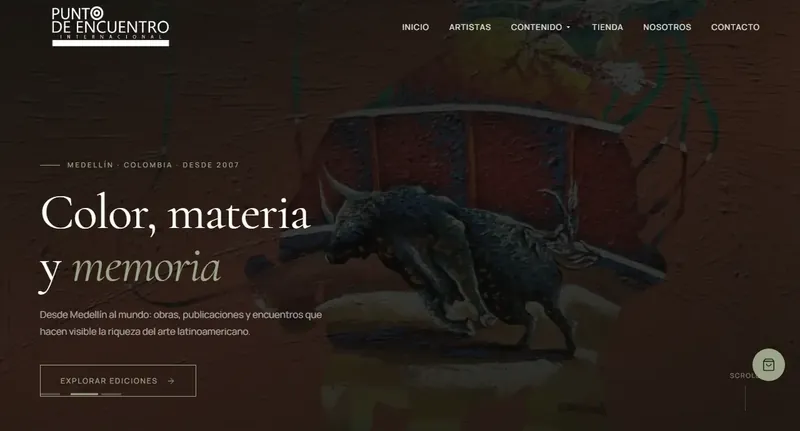 Punto de EncuentroCulture · Platform and store
An artist catalog, events, publications and an online store on one site: several layers that used to live apart.
See case study
-
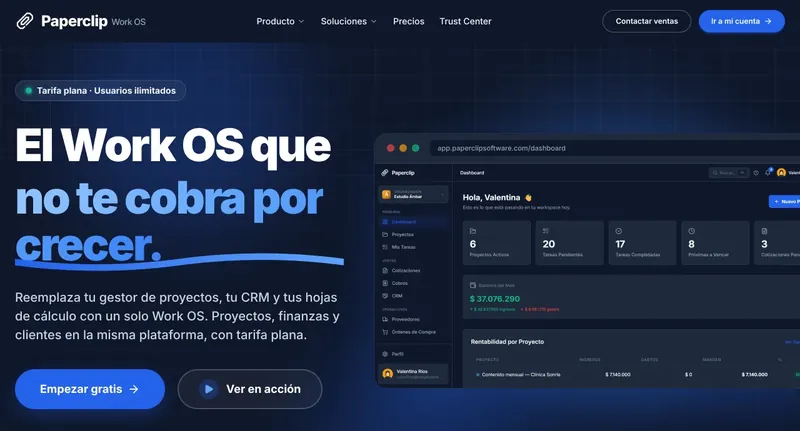 PaperclipSaaS · Work OS
A site that explains the product and leads to sign-up, connected to the platform where agencies manage projects, CRM and finances.
See case study
-
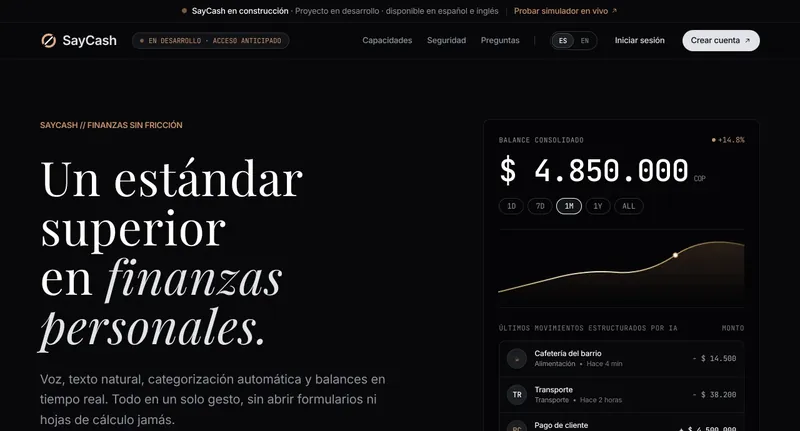 SayCashApp · AI-powered personal finance
The landing page that introduces the app and leads to the download: the conversion layer of an AI product.
See case study
06 Questions
Frequently asked questions about digital ecosystems.
Have another question? Message us and we'll reply the same business day.
Ask on WhatsAppWhat is a digital ecosystem for a business?
It's the set of connected channels and tools that takes someone from discovering your business to buying from you and coming back: how they find you, where they understand your offer, who answers them and how you measure what happens. The difference from having loose pieces is that each part hands the customer to the next without losing them along the way.
Do I need all four layers from day one?
No. The sensible approach is to fix the layer where you lose the most customers first, which is almost always customer service or conversion, and add the rest once that works. Paying for ads without a page that converts or someone to answer is the fastest way to burn your budget.
Aren't Instagram and WhatsApp enough?
They can be to start, but you depend on platforms you don't control, you don't show up when someone searches Google, and customer service depends on someone watching their phone. A website of your own, connected to WhatsApp and to tracking, gives you a place to explain your offer and know where every customer comes from.
What if I already have a website?
Often it doesn't need to be rebuilt. We check whether it converts, whether it's connected to WhatsApp and to tracking, and whether someone answers in time. Sometimes adding an AI assistant, fixing the call to action and setting up tracking properly is enough.
How much does it cost to build a digital ecosystem?
It depends on which layers you need, what you already have and the integrations: a landing page with WhatsApp is not the same as a store with payments, an AI assistant and inventory. At Blinq we send a written quote within 24 business hours after the free assessment, with a one-time setup and a monthly care plan. See how our plans work.
Where are you losing customers?
We review your four layers and tell you which one to fix first. Free, with no commitment.